
Thank You, Cape Town
Two Steps Forward, One Step Back

This newsletter follows my journey moving between places and people working with technology that respects natural rhythms rather than overriding them. Thanks for being here :)
I wrote this listening to this.
As-salamu alaykum, howzit, hola,
My experience in Cape Town doesn’t fit into a newsletter. It sprawls. It smells like salt and tastes like Moroccan tea.
A family that became family. Salt in my hair and an ache in my ribs. A three-year-old who moved two steps forward, one step back, and made me question everything about time.
I’ve written twice before on my two months in Cape Town (piece 1, piece 2), dispatches from the middle. This is my attempt at the whole.
home: where rhythm is taught
Raise your hands to the sky. Move them. Who’s controlling them, you or me? My host-dad Shafiek asked me this question early in my time living with him. He asked it of any new person to his life. To make them think, he would say.
So much of my thinking in Cape Town blossomed from conversations with and challenges from Shafiek. He was a master of story and used it to teach. When I first messaged him, he told me his life was simple: he reads, plays in water, and keeps bees. Biological father of seven, step-in father to many more, and surf coach taking kids from the street to the shores. I quickly learned his life was more complicated than he made it out to be. But by centering those things — family, reading, water, and bees — Shafiek’s heart was spinning around an axis he chose.
It was at a celebration of the Prophet Mohammed’s birthday, my host family brought me along, where I spoke with a man who introduced me to the spinning heart.
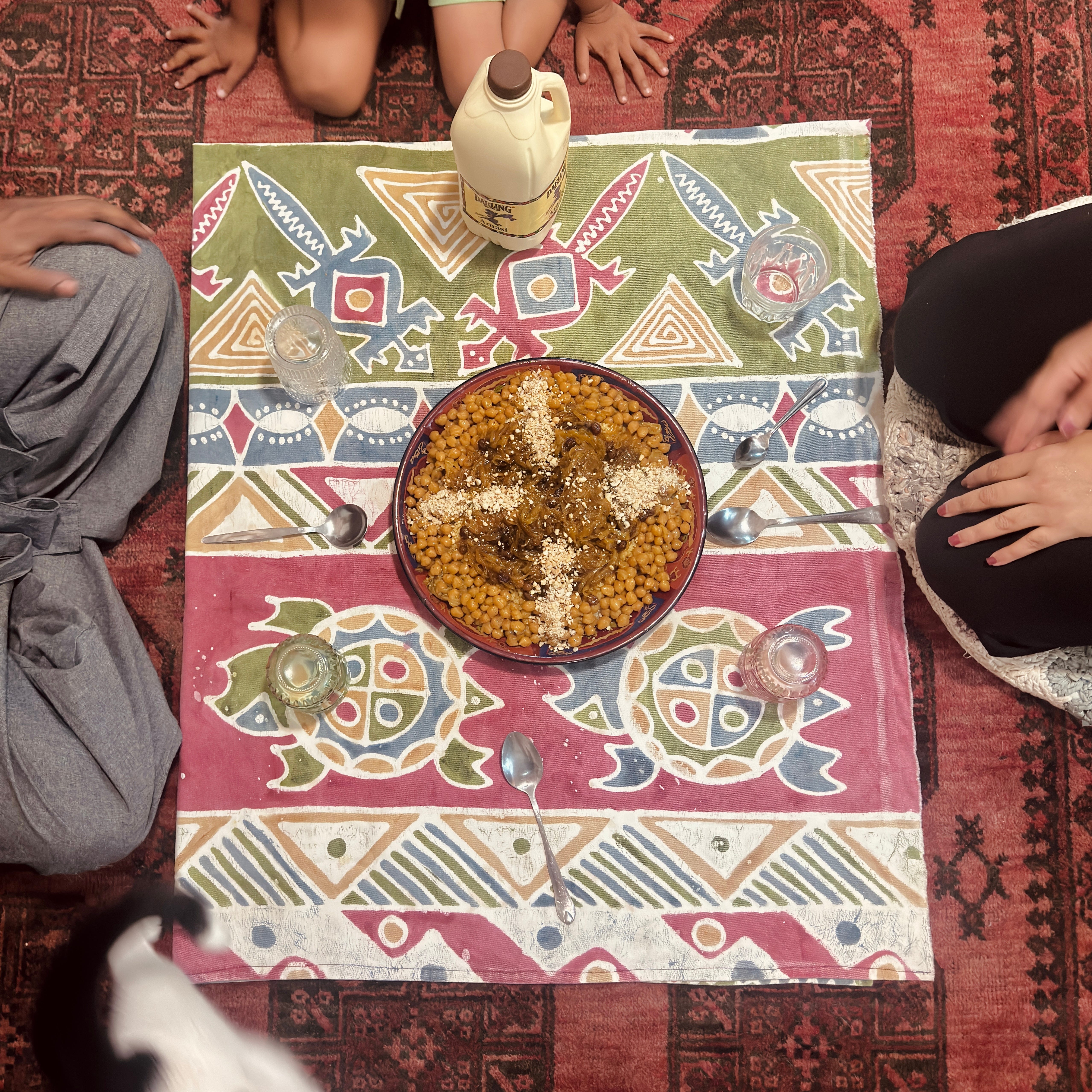
We sat on the ground, legs crossed, eating in the traditional communal way we ate at home. By this point my hips had loosened to it. Two phrases I learned in Arabic to explain it: al-akl min al-qaṣ’a, eating from the shared bowl and al-akl mimma yalik, eating from what is in front of you. One dish, many hands or spoons, but no overstepping your boundaries. You eat from your small territory and the circle stays balanced. Everyone limits themselves so everyone gets enough.
The man sitting next to me was a professional high-speed water skier, originally from the UK, with some of the bushiest eyebrows I have ever seen. Between bites, he explained that all of us have spinning hearts. They revolve around various things — love, status, fear — or sometimes don’t revolve around anything at all. Just wobble in place.
The key I have learned from my teacher is to figure out the axis your heart spins around, he told me.
I thought about my own heart. What it had been spinning around before I arrived. Whether there was an axis at all, or just the spin itself.
Shafiek never gave me the answer to his question about the hands. He just made me think. But with time, the spinning heart began to shape my answer.
It came, in part, from his three-year-old son.
Akram was smart as a whip and the funniest little kid I’ve met. We became good buds. I miss him dearly. He was in that phase where everything he does, he needs everyone watching. The sort of kid who stops the game to make sure all eyes are on him before he continues.
To reach the beach or get to the car, we descended two flights of stairs. We were often in a rush, his parents waiting with somewhere to be, but Akram insisted on finding some new way down. Double-stepping. Two steps forward, one step back. Sideways. Each trip a small invention.
I’d catch myself getting impatient. Come on bro, your parents are waiting. But his pace was his own. The stairs were a game, a discovery, a way of being in his body. And here I was, trying to warp his time into mine.
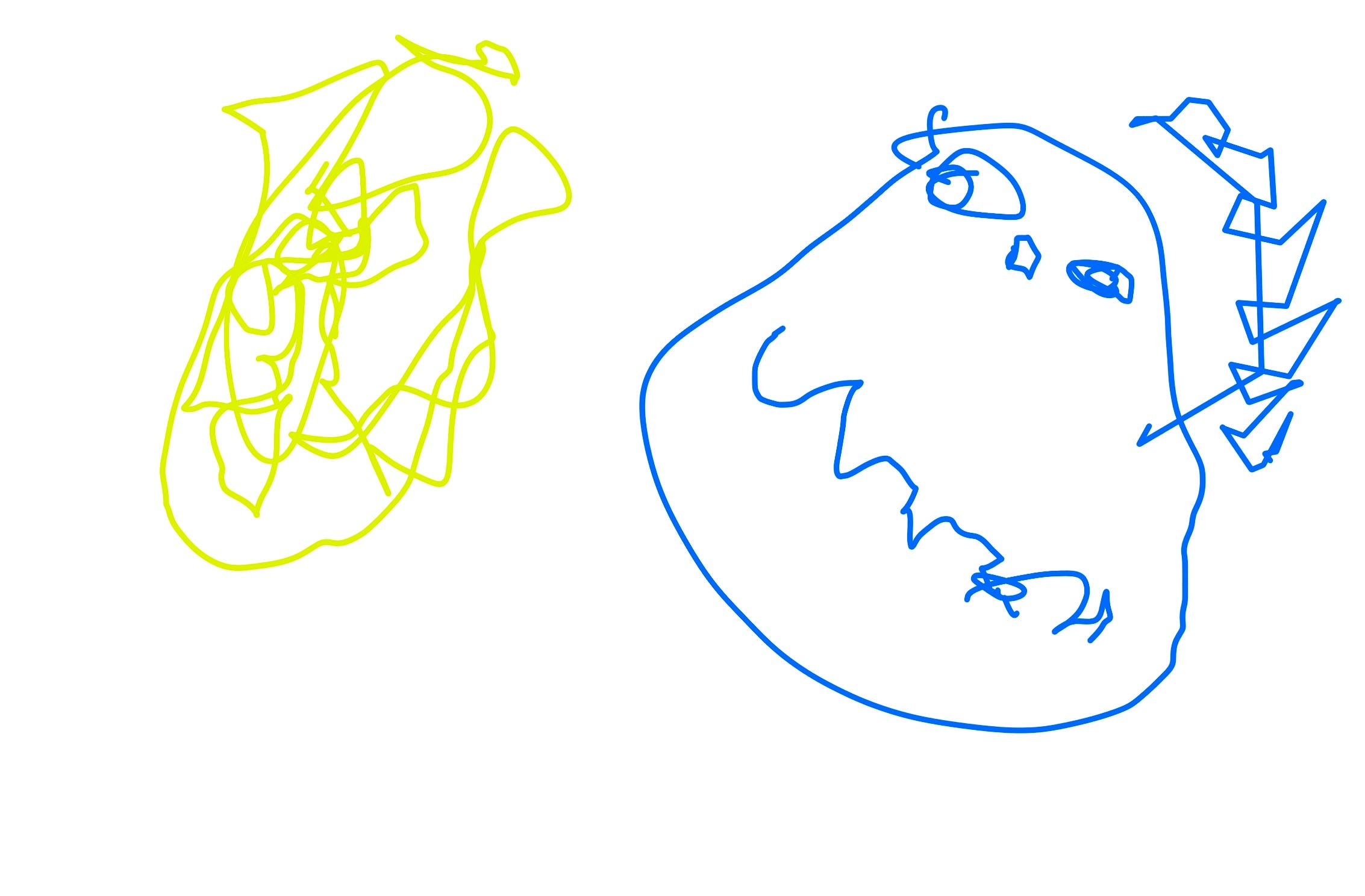
Once outside, he was all body. Sprinting on the beach until his chest heaved, curly hair bouncing, shrieking when the water nipped at his toes. Then he'd freeze, squat over a jellyfish, poke it with one cautious finger, and sprint again.
Something was off with the sea that season. Dead seals kept appearing on the sand, way more than ever before, according to Shafiek and his 15 years of living in Muizenberg. Akram was fascinated by them and how the gulls would pick out their eyeballs. Explaining why there were so many was a problem I didn’t know how to simplify.
Whenever Akram received candy, he loved candy, he’d go around to everyone in the room. Let’s share. Dividing his treasure to make sure everyone got some. I could not wrap my head around how a three-year-old could be so generous. I sure know I wasn’t at his age. But then again, Akram in Arabic means the most generous.
I also watched him absorb the screen and the screen absorb him. The way he started holding his hands when excited. It was a gesture no one in the house made, but the animated dog on the TV did. Phrases that didn't quite fit a three-year-old's mouth. Shafiek would tease him sometimes: You soundin' like a white boy! The TV taught him English in nine months; before South Africa, he'd lived in an Arabic and French speaking household in Morocco. Living with him was like watching a time-lapse of becoming. How he controlled the TV. How the TV controlled him.
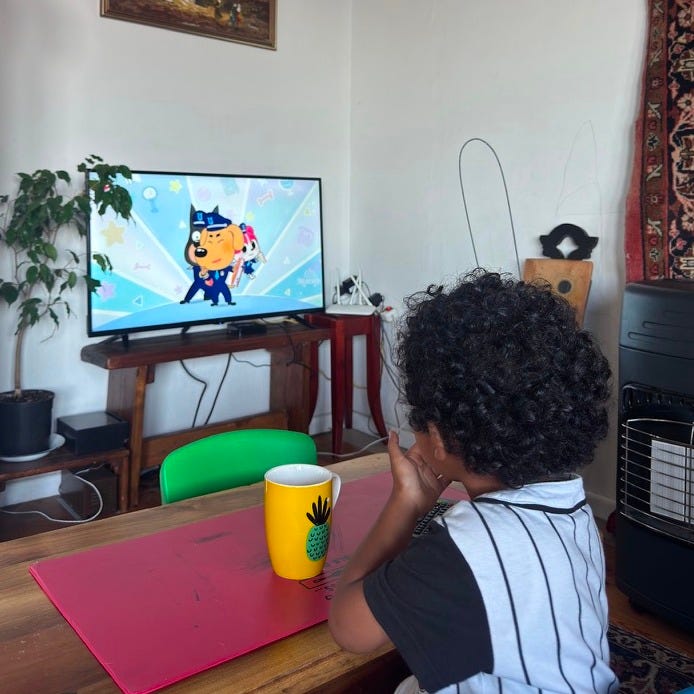
Cape Town softened my certainties about screens. I don’t think they’re so clearly the enemy to children I arrived believing them to be. But watching Akram, the way his body would drift toward whatever glowed, a moth to any flame that flickered, I felt something older than argument rise in me. The urge to step between him and the light. To say: not yet. Stay here, in the world that doesn’t refresh. The world where boredom isn't failure.
What do you protect a child from when the thing you fear is already inside the house, already inside the language he’s learning to speak? His mother, Hind, taught his Arabic brain English using the screen. Nine months and he was fluent. A miracle of absorption. Parenting is enormous, and sometimes the TV is the only hour you get to sit down, to breathe, to be a person and not just a parent. I watched Hind’s exhaustion.
I kept watching Akram’s hands. The way they moved when he got excited, fingers splayed, wrists bent at an angle I’d seen somewhere before. Not from Shafiek. Not from Hind. Not from any of the aunties and uncles who came through the apartment. From the animated dog on the screen. From a gesture designed in some studio thousands of miles away, by people who would never know Akram’s name.
He was three years old, learning how to be a body in the world, and some of what he was learning came from far away. What unsettled me was that it arrived so easily, braided into care, language, and survival. He navigated YouTube like a champ.
Hind’s exhaustion was real, but so was her presence. She could be running on empty and still appear with the teapot at exactly the moment a conversation needed saving.
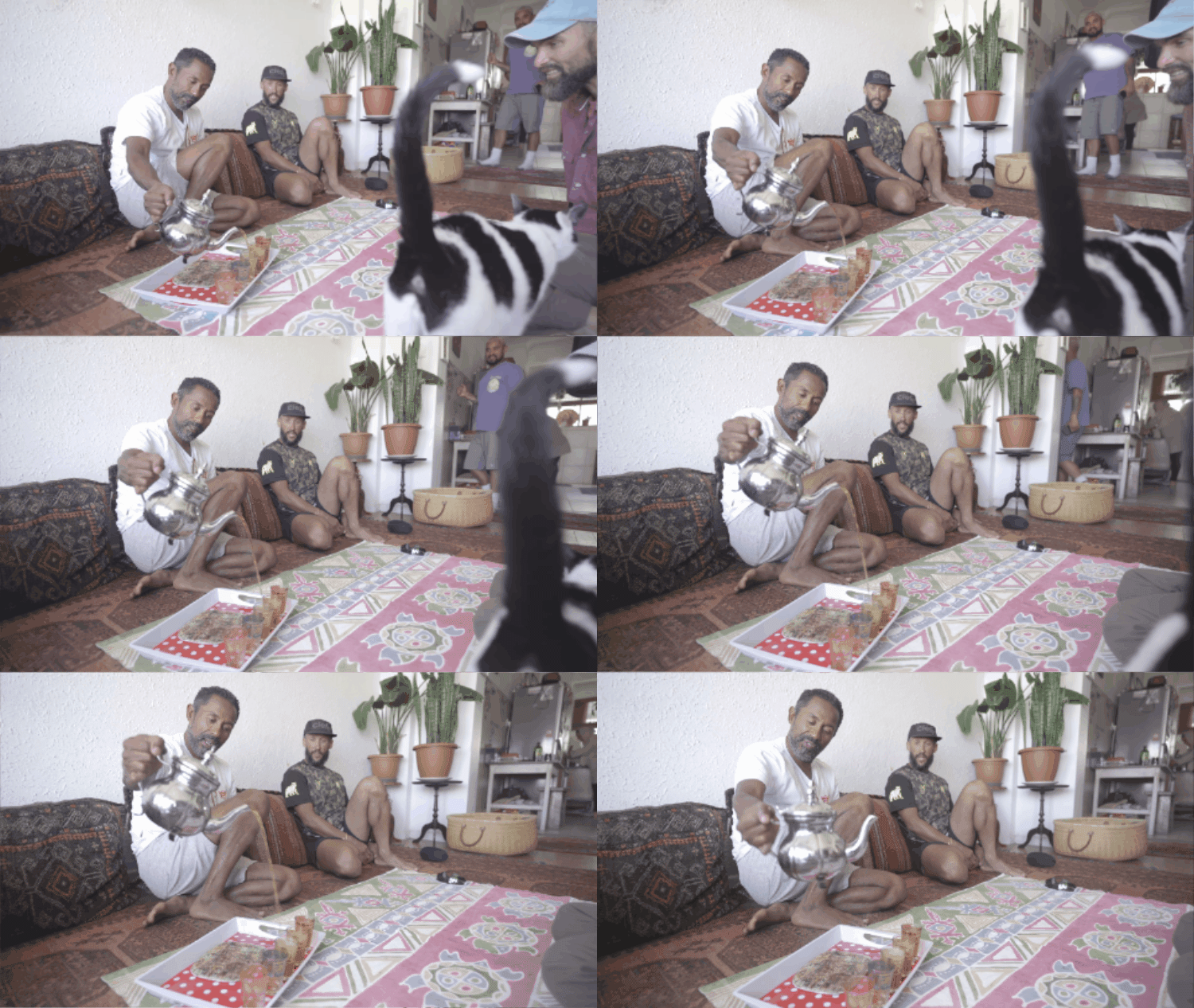
Moroccan tea is simple: green tea, mint, and a generous amount of sugar. You don’t stir it. The pouring of it is its own language. You hold the pot progressively higher — as high as you can without spilling — and let the tea fall in a long amber thread. Once all the glasses are full, you pour them back into the pot. This mixes and aerates the tea and warms the glasses. Then you pour again. The ritual has a rhythm: fill, return, fill.
I barged in on it early, not knowing. Picked up the teapot like it was just a teapot. Shafiek corrected me. I learned.
Hind had spent nearly all her life in Morocco and carried its traditions into this apartment. She didn’t learn to cook until she married Shafiek, but she learned well. Couscous with sour milk poured over the top. Sheep foot stew. One morning after a camping trip, all we had was hotdogs and scraps. Through some kind of wizardry, she transformed five ingredients into sandwiches so good I still think about them. I cannot explain how she did it. I watched the whole thing. I've eaten a lot of hotdog “things” in my life. These were different.
When she wasn’t mothering, tending the house, or cooking, she was writing a book comparing women in Cape Town to those back home. She told me TikTok was how she stayed connected. Watching videos from Morocco made her feel closer to home.
The rhythm of the tea — fill, return, fill — reminded me of Akram on the stairs. Two forward, one back. Inefficiency that wasn’t inefficient at all.
With time, when we hosted guests, Shafiek would catch my eye as Hind brought the teapot over. He wouldn’t say anything. Just a look, those grey-ringed pupils, sun-scarred from decades in the water, and a small nod toward the pot. The first few times my hand shook. Tea splattered on the floor, missed the glass, broke the thread. But I kept at it. Poured from height. Poured back. Poured again. My hand steadied. The guests received their tea. Shafiek explained the ritual while I demonstrated.
Was it Shafiek controlling me, or me controlling me?
water: where body is corrected
I moved to Muizenberg to play in water. It was the first time in my life living on the ocean.
Mornings I’d wake before the light was full, run, and then throw myself into the tidal pool or straight into the waves. The water shocked me awake in a way caffeine never could. Growing up I never really spent much time swimming. In Cape Town I got to swim pretty much every day. After, I’d rub my hair and hear the sand fall from my scalp. That sound became a kind of proof I was alive.
When the wind was right, surfing overwrote everything else. Shafiek taught me the way he taught most things: not by explanation but by example. He’d yell from the water, paddle paddle paddle deeper deeper deeper, and I’d learn by getting it wrong until I got it right. Surfing is maybe 10% riding the wave and 90% paddling. Ninety percent humility. My shoulders, already limited in mobility from some past biking accidents, struggled with the repetitive rotational movements. And my first few weeks of surfing my ribs hurt so bad. I had to learn to not tense up. To breathe into the pain instead of bracing against it. Water does not reward rigidity.
Surfing reminded me of learning to boulder. You can try to muscle your way up a wall, but the rock always wins. The real climbers move like water — finding the angle, trusting the friction, letting the body solve problems the mind can’t. Finesse, not force. Surfing is the same. You can paddle until your shoulders give out or fight the wave. The ocean will just keep knocking you. The water, like the rock, is a mirror. It shows how you’re holding yourself. Shafiek would say this all the time: what happens out there reflects what’s happening in here, with his hand to his chest.
This was the first physical thing in a while I'd done where I was a complete beginner. And for once, I didn't try to pretend otherwise.
I’ve noticed this pattern in myself: an ego-driven urge to present myself as better at sports than I actually am. The casual embellishment of yeah, I’ve done a bit of this before. The way I’d rather stay quiet than ask a basic question. Some inherited masculine performance I never signed up for but kept performing anyway.
In the water, I let it go. I got worked and asked for advice. I sat where they told me to sit. I didn’t defend, didn’t posture, didn’t try to impress. There was no one to impress anyway — just Shafiek’s crew, who’d been doing this for decades and could see exactly what I was. A beginner.
Surfing is a social technology, the older kind I’m coming to increasingly appreciate. A practice that teaches you how to be with others and with yourself. How to wait. How to read conditions you can’t control. How to show up day after day and get humbled and go back out anyway. How to hoot when someone else catches a good wave, even if you’ve been waiting longer.
I learned more about patience, presence, and masculinity while surfing than I had in years of thinking about it. The water doesn’t care about your theories.
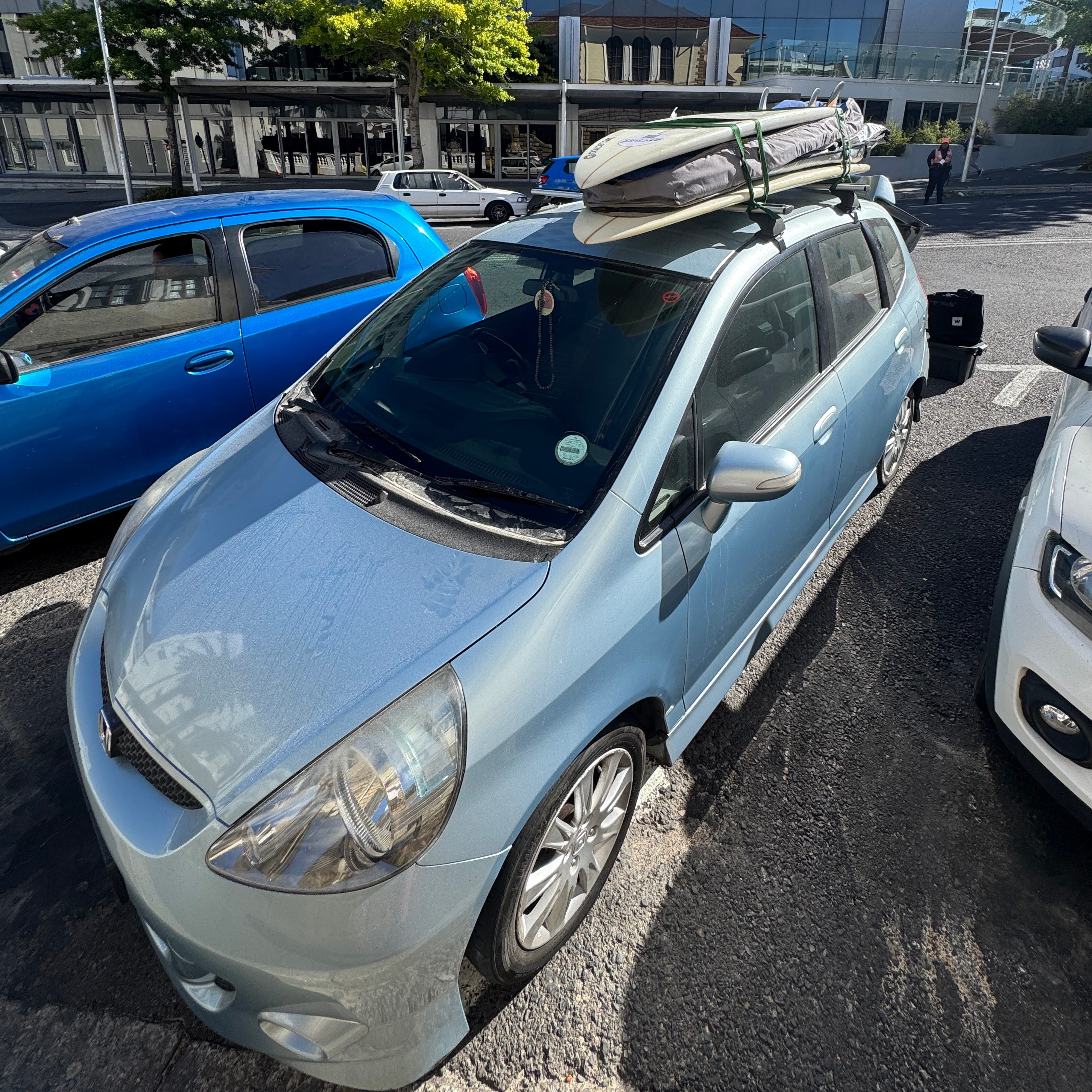
About a month and a half in, Shafiek took me north to Elands Bay. It’s a small township two hours up the coast with a world-famous left-hand point break. The Atlantic there was a different animal. Colder, heavier, the kind of water that bites through neoprene. But the stoke was high and the swell was clean and I paddled out with the crew like I belonged there, even though anyone in their right mind would say I wasn’t ready.
It was at Elands that Shafiek yelled for me to take a wave I hadn’t scouted. I paddled hard with a stoke fueled from experiencing the rush of just dropping into a wave that was like 2 feet bigger than anything I’d ever surfed before. I popped up, and collided straight into a Scottish guy who’d been riding it first. We tangled in the wash, boards knocking, limbs everywhere. He came up annoyed. I came up embarrassed. Something hit my left ribs, hard, but the water was so cold I told myself it was just bruising. I kept paddling out and catching what I could.
The next morning I woke in sharp pain. But the swell had pushed in overnight and the waves were the most beautiful I’d seen since arriving. I pulled my wetsuit over a brutally aching body and went out anyway. Caught several. Then on one, as I tried to pop up, a jolt ran through my spine like a current and I couldn’t rise. Just floated there in the frigid water, feeling like an old man.
Cracked rib, it turned out. It took trying to surf on it the following week to confirm.
That was the end of my Cape Town surfing career :(
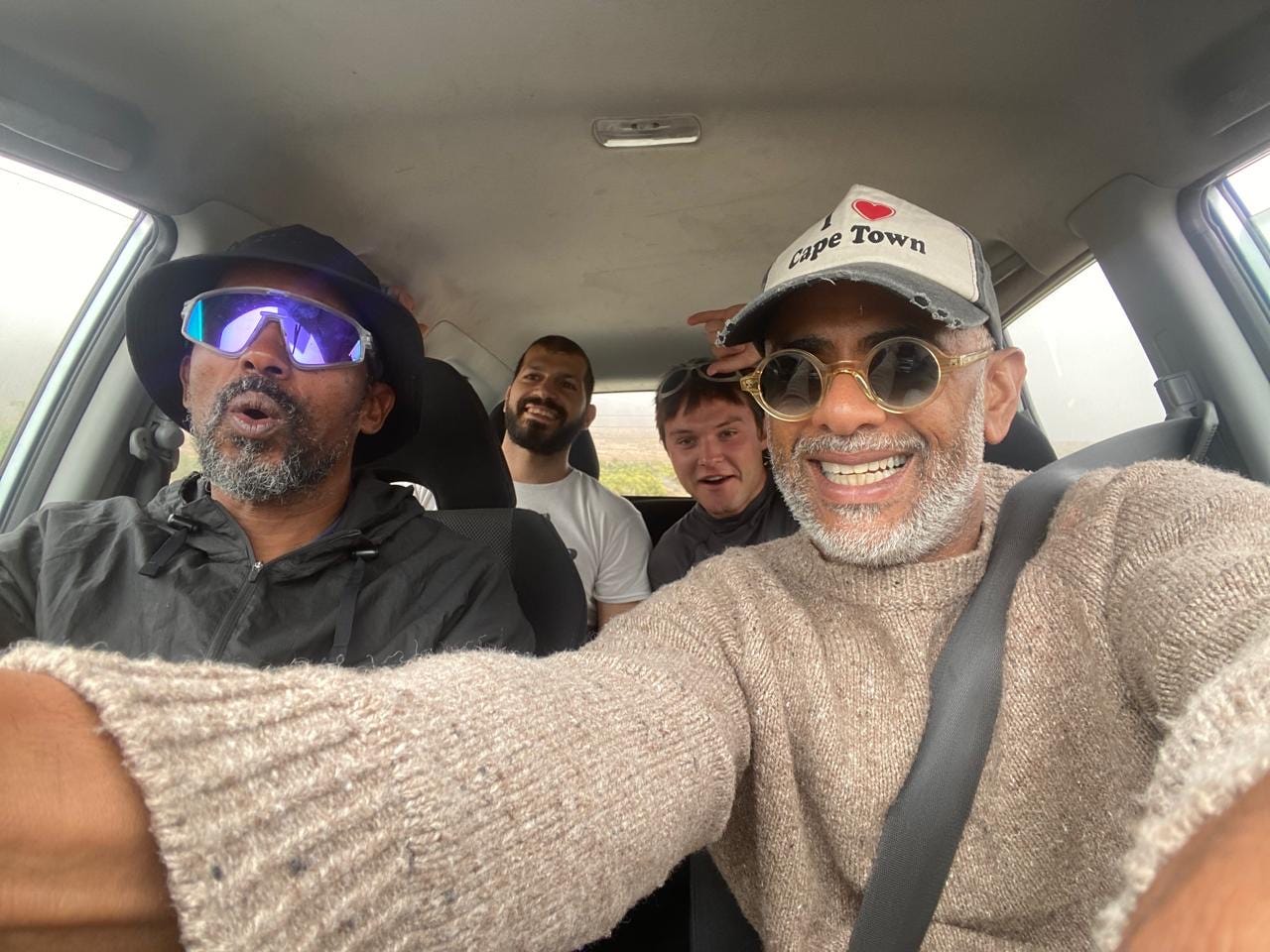
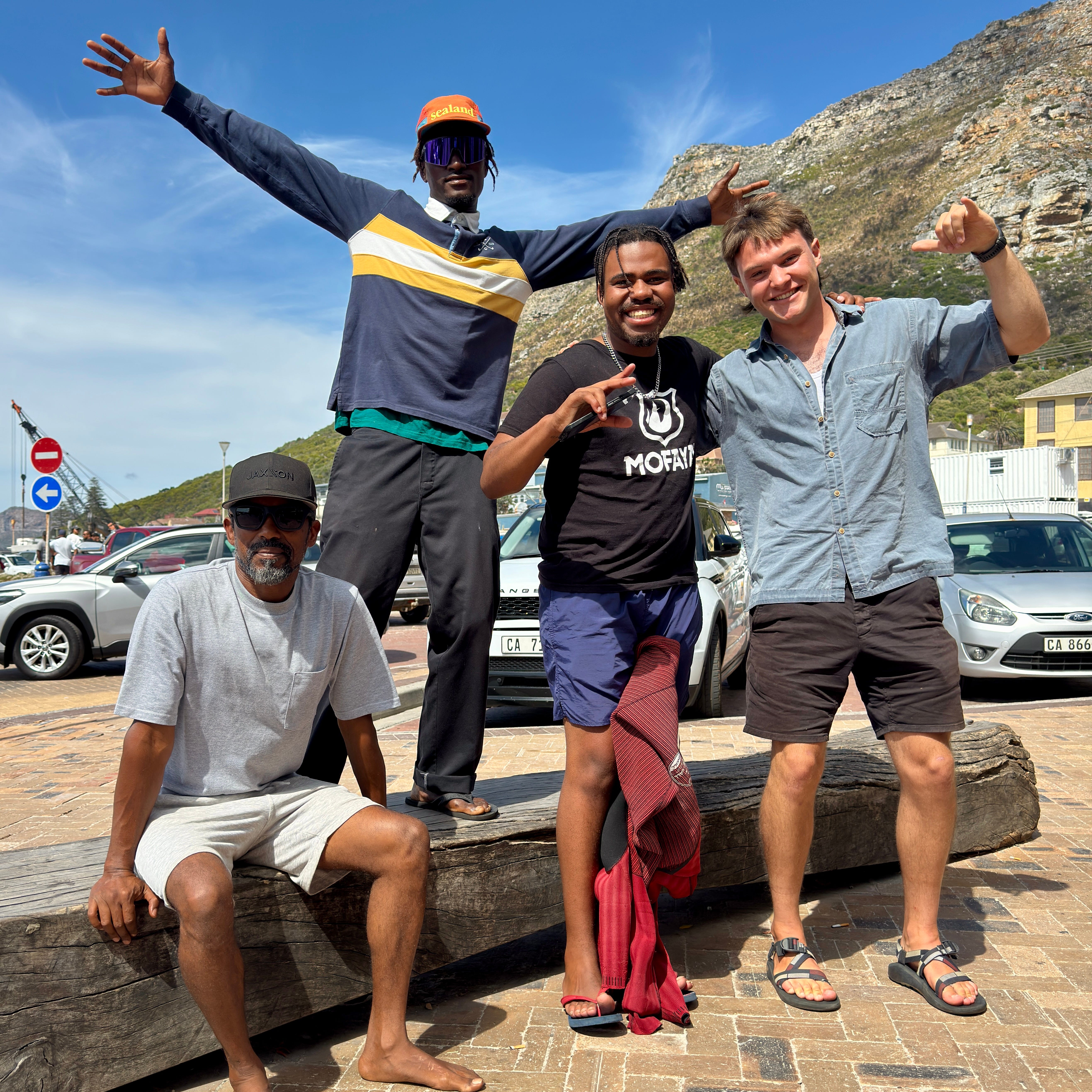
What I remember most from Elands, beyond catching a few of the most wicked waves of my life, isn’t the injury. It’s the men. Shafiek’s crew welcomed me even though I was a beginner, even though I snaked the Scottish guy's wave and wiped out and needed to be told where to sit in the lineup. They didn’t make me earn my place through performance. They just made space. At night we had a braai and someone always made sure everyone had enough to eat. I felt like the little boy of the group.
Imran, one of the crew, had a phrase he repeated like a mantra: Brolove. It’s all about the brolove. I’d never felt such a warm embrace from fellow men. With Shafiek, it was just the way things were. Men taking care of men. Brotherhood without explanation.
Before we left Elands, Shafiek took us to see the cave. A short drive from the house we stayed in, tucked into the rocks above the bay. Shafiek used to live in Elands many years ago, keeping bees here, and surfing daily. In those days things were different. When the white surfers would chase him and his friends of color away from the waves they’d retreat to this cave. This was a common reality in those years, especially in places like Elands.
Inside: hundreds of handprints. Eland with red bodies, their heads and legs faded where the red paint had worn to nothing. Images of what San shamans saw during trance. Visions used to heal the sick, make rain, control the game. The paintings are somewhere between 200 and 6000 years old. The people who made them lived here for over 20,000 years.
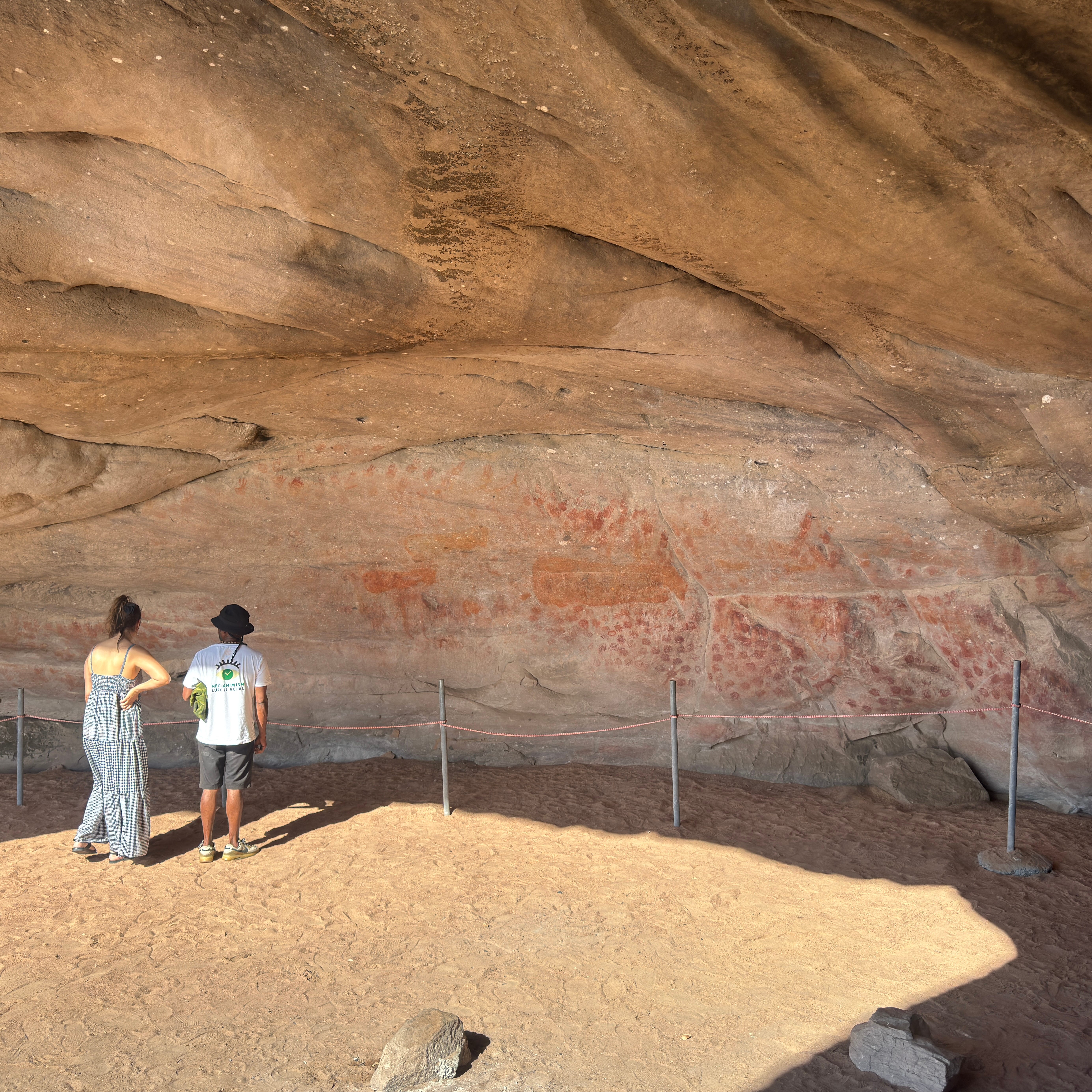
I stood there with salt still in my hair, ribs aching, face properly burnt, looking at hands pressed to rock by people who had stood in the same spot after their own time in the water. I tried to imagine the decisions that had taken place in the cave. The handprints weren’t signatures. They were relation, drawing power from the rock, leaving something behind. Press, release, move on.
We drove back to Cape Town.
work: where machine hums
An unforeseen aspect of my fellowship route: I was chasing summer. In London and Amsterdam, many people I wanted to meet were on holiday. In Cape Town, the students were finishing finals by the time I arrived. The lab I was working with had their end-of-year party in my second week in the city. I was just learning names.
The Digital Media Sociology Lab was quiet most days. A few regulars. One was Ester, a professor from Utrecht visiting for her partner's family. She lived near Muizenberg, so we'd ride the train back together. It would go past wine estates and golf courses, then through parts where shacks filled the windows, laundry strung between corrugated roofs. At some stops the cars would flood with workers heading home, exhausted faces. At others, barely anyone. The train had a reputation: for years people got robbed in broad daylight. It's safer now, new security, more police, but locals still raised their eyebrows when I told them I rode it. With Ester beside me, I forgot to be on guard. We'd talk about her work with refugee camps, about digital labor, about family, and the ride would end before I noticed.
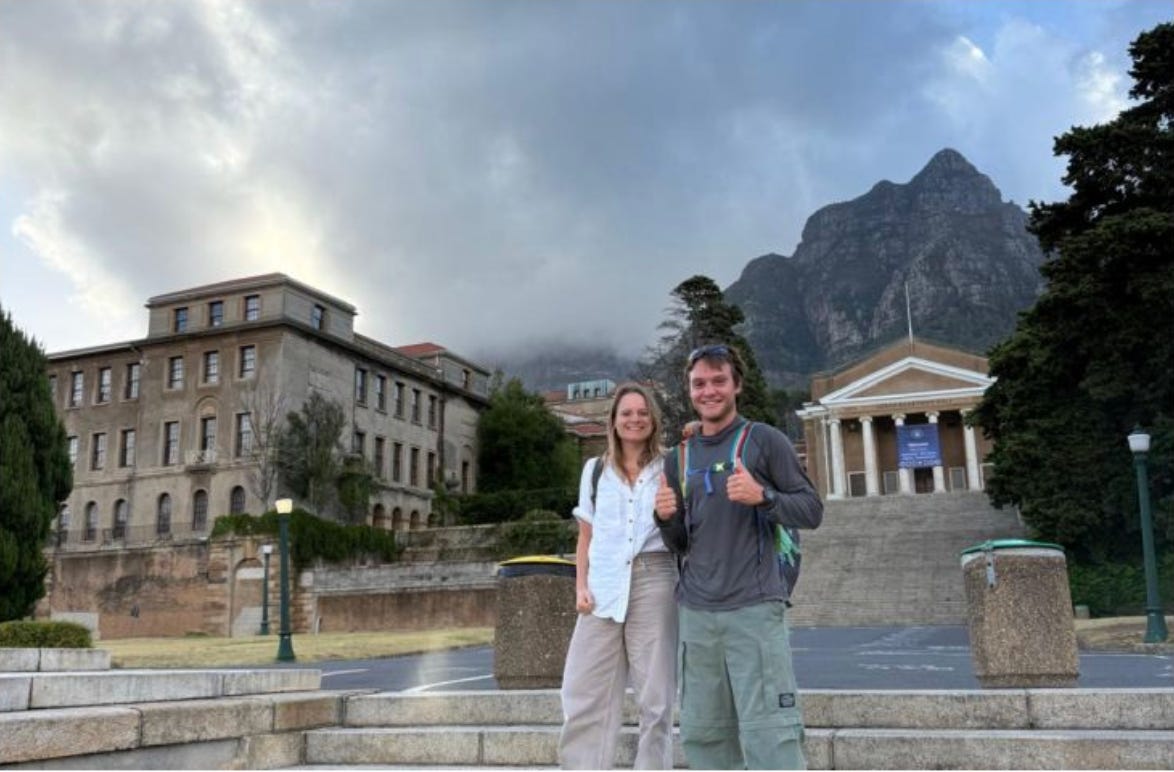
Together we arrived at realizing how in South Africa, you generally don’t fully cut family members out of your life if you’re having trouble with them. You just don’t. Not like people do in Europe or America. I thought about my own family. About the years people have held each other at a distance. Cape Town gave me time to sit with that.
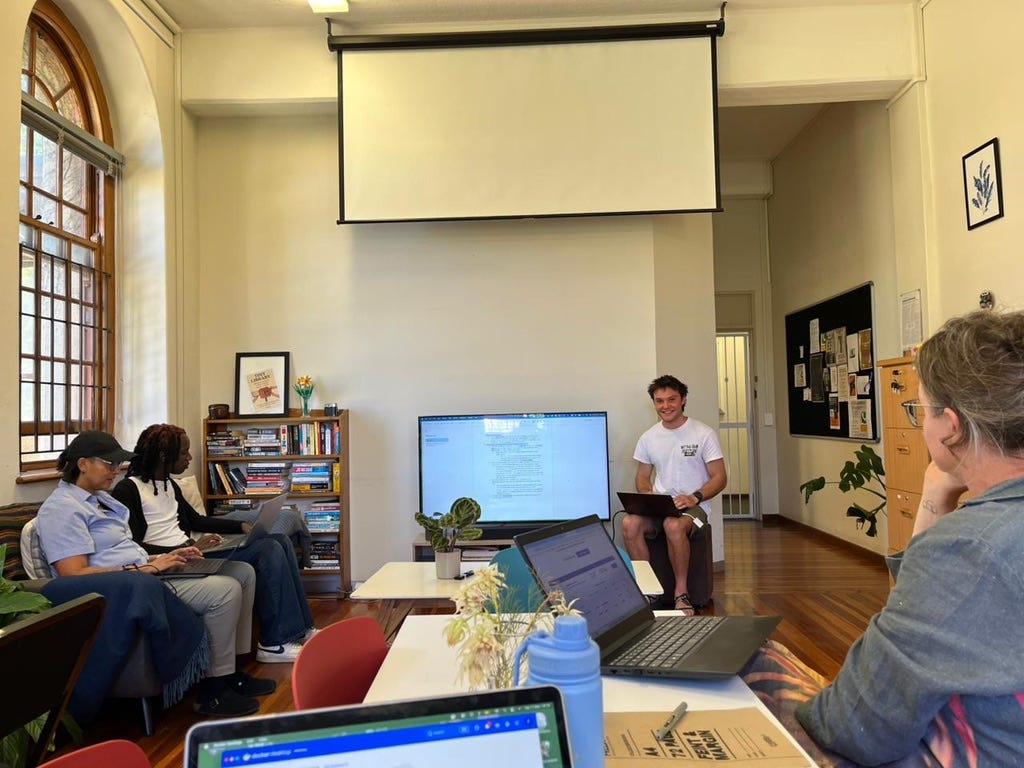
Tanja Bosch, the lab director, became something like a stand-in mother to me. She told me which trails were safe to run. We talked as much about the outdoor scene as we did about research. She's the one who got me hooked on Cape Town's trail running world. She let me help set route for the UTCT marathon, which was a major contribution to my budding trail running career. One evening she brought Ester and me to a dinner beside a shark tank(!), surrounded by researchers from the International Panel on the Information Environment. Maybe the most surreal networking opportunity I’ve had. Time with Tanja let me see what more academia could look like in life. Not a retreat from the world, but a way to stay close to questions that matter.
The DMS lab became a place to build. I continued work on Rhythm Lab, my ongoing project translating the temporal rhythms of different social platforms into generative music. I began writing a chapter on user interface design for an academic journal, exploring how the small choices designers make have shaped what users feel, over the last several decades. And whenever I had free time, Shafiek and I worked on building an app: a contemplation tool where users sit with the difference between two similar words. Patience and waiting. Loneliness and solitude. The practice comes from Arabic intellectual tradition. The app became a place to implement some of the design patterns I’d been studying this year: slower rhythms, bounded sessions, friction that invites presence rather than optimization. Expect more on it soon!
The line between helping and learning kept blurring.
The research I helped Tanja with sat near what I’d come curious about. She was writing about what she called algorithmic seasonality — the way platforms like TikTok have created their own seasons, detached from weather or place. #HotGirlSummer and #CozyWinter circulate globally regardless of hemisphere, synced to trend cycles rather than temperature. Meanwhile, hashtags like #heatwave and #climatecrisis float through the same feeds, absorbed into ambient mood rather than political urgency.
I spent hours scrolling TikTok for the project, cataloging how seasonal aesthetics and climate content rarely touched. I was collecting this data during a Cape Town summer while my feed served me Northern Hemisphere autumn: pumpkin spice, wool sweaters, falling leaves. The disconnect was the point. The platform doesn’t care where you are. It cares what’s trending.
It was strange to study this while living it. To scroll through #autumnvibes in a room where the leaves outside were nowhere close to turning. To watch climate crisis become content: stylized, softened, served between outfit hauls and apartment tours. Tanja’s phrase for it was aesthetic depoliticization: the way crisis gets absorbed into the feed until it feels like weather you scroll past, not something you act on.
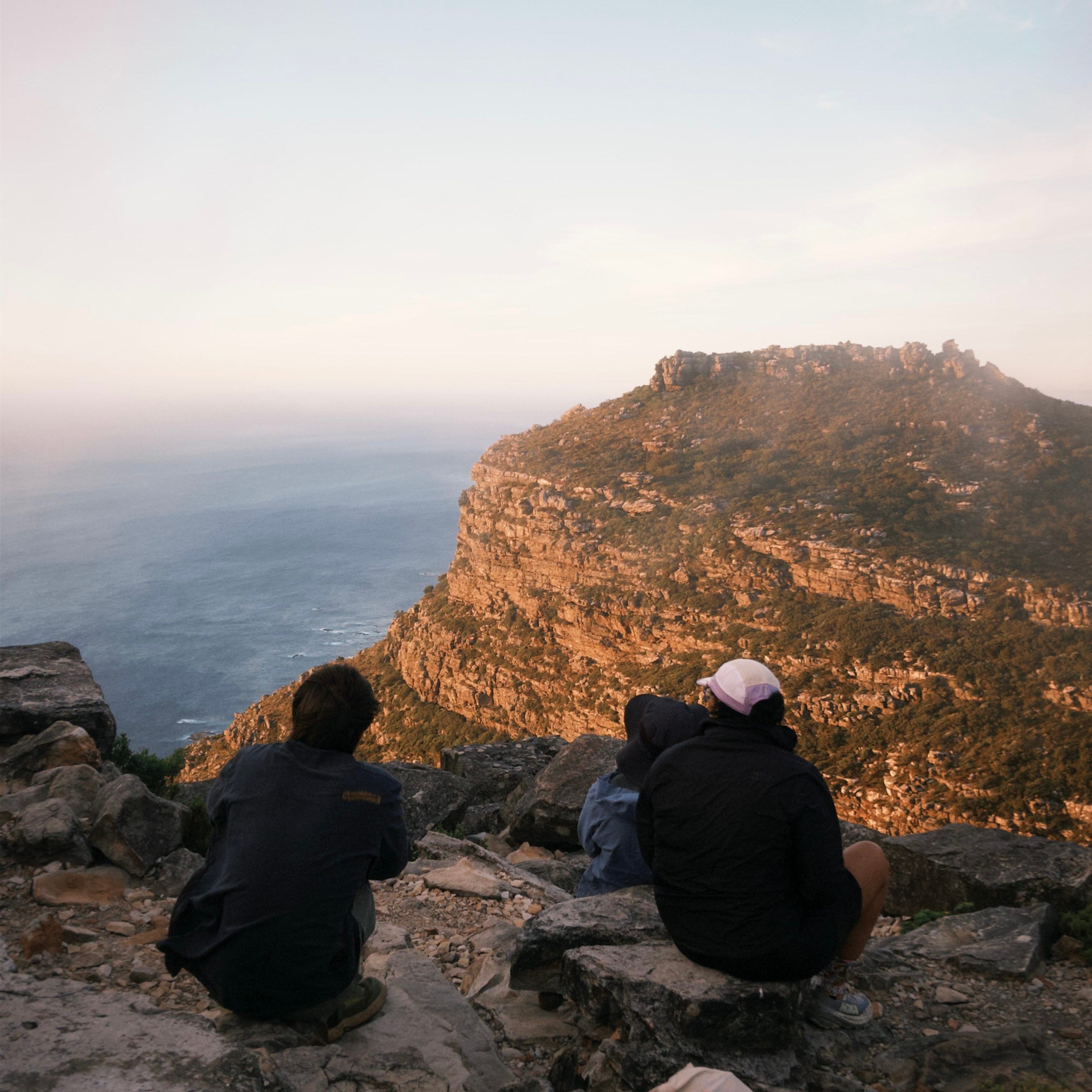
One Monday night, Tanja and some of her people were doing a hut trip and I got an invite.
The Cape Town Mountain Club’s hut has been there for over a hundred years, perched where the city is not visible and the wind doesn’t stop. Inside: black-and-white photos of snow on the summit, logbooks with thousands of entries. I signed my name on an appended page in the book for guests. There were decades of names. I thought about who wasn’t in them.
The hut carries apartheid history. Whites-only until the 1990s. The outdoor community in Cape Town is still mostly white.
We hiked up in fading light, the city disappearing below, the temperature dropping with each step. Table Mountain is only 3,558 feet high, but people underestimate it. Weather rolls in without warning. Clear skies turn to fog and wind in minutes. Every year, hikers die up there. They call the clouds the Table Cloth, the way they spill over the summit like fabric draping a table's edge.
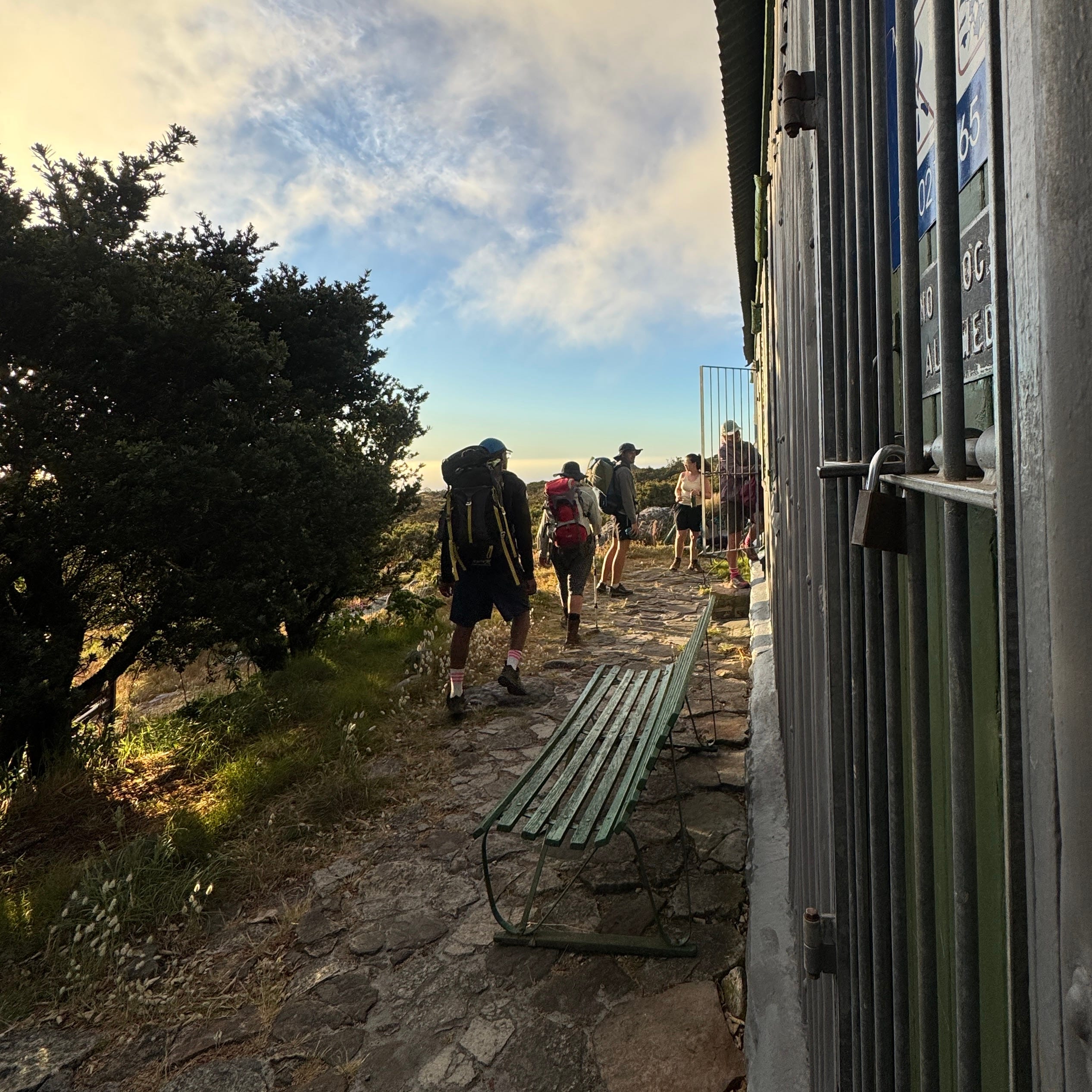
I lay on a padded mat stored in a closet, listening to wind against the tin roof, the creak of old wood, gusts of wind turning to snores. In the morning I watched the sun hit the Atlantic on the hike down, the cape stretched out beneath us. It was unfathomably beautiful.
From the base of the mountain, one of Tanja’s colleagues and I split an Uber to wherever our Tuesdays were taking us. This was an amazing perk of Cape Town, you could go on a trail run over a mountain and then call an Uber to take you back to where you started.
I took over 100 Ubers over two months in Cape Town. It is often the only, safe, way to get from point to point without owning a vehicle. Somewhere along the way I started keeping a journal of the drivers — their names, their side hustles, the industries they’d left behind. One had owned a print shop. Another ran a pie shop. More often than not, they were immigrants from elsewhere in Africa, stitching together livelihoods from what the city offered. Uber was rarely the destination, it was the bridge. A way to subsidize a dream or save up for the next venture.
Those rides became a crash course in entrepreneurship and the continent. Thirty minutes from the mountain to Muizenberg, and I’d learn about Zimbabwe’s economy, or the best way to import goods from Nigeria, or why a man left a stable job in Malawi to drive strangers around a city he was still learning.
Drivers would pick up on my American accent, especially early in my time in Cape Town, and ask me about Trump. They’d explain how “coloured” means something different in South Africa than it does in the U.S. It’s a term describing the complex interplay of ancestry that defines so many South Africans. I’d nod and ask more questions. I was learning how little my frameworks fit here. Race, history, belonging. Cape Town scrambled the categories I’d arrived with.
The Uber drivers quickly led me to see that so many people in Cape Town are building something.
Through my host family’s network, I found myself helping dreamers build digital tools. A tour guide in Bo-Kaap who’d built a QR code payment app with ChatGPT because tourists couldn’t tip without South African bank accounts. A professional surfer trying to fundraise from his iPhone because sponsors only offer gear, not salary. People at a shelter learning to build websites for NPOs using AI so they could earn a living.
Cape Town felt like a place where things could actually be built — not despite the lack of regulation, but because of it. The gaps where formal systems had failed or never arrived. People weren’t waiting for permission. They were just making it work. None of this was easy or romantic. The hustle carried real exhaustion and real risk. But it was also real agency.
By the time I left, I was just finding my footing. Two months to learn how to show up and be of service.
departure: two steps forward, one step back
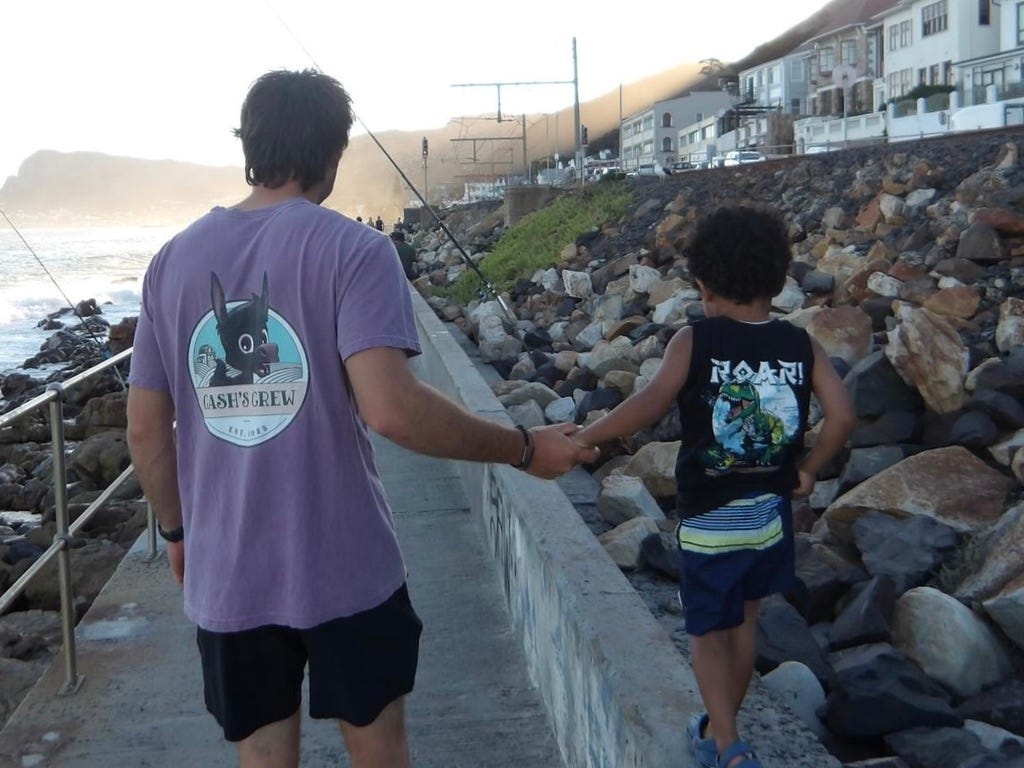
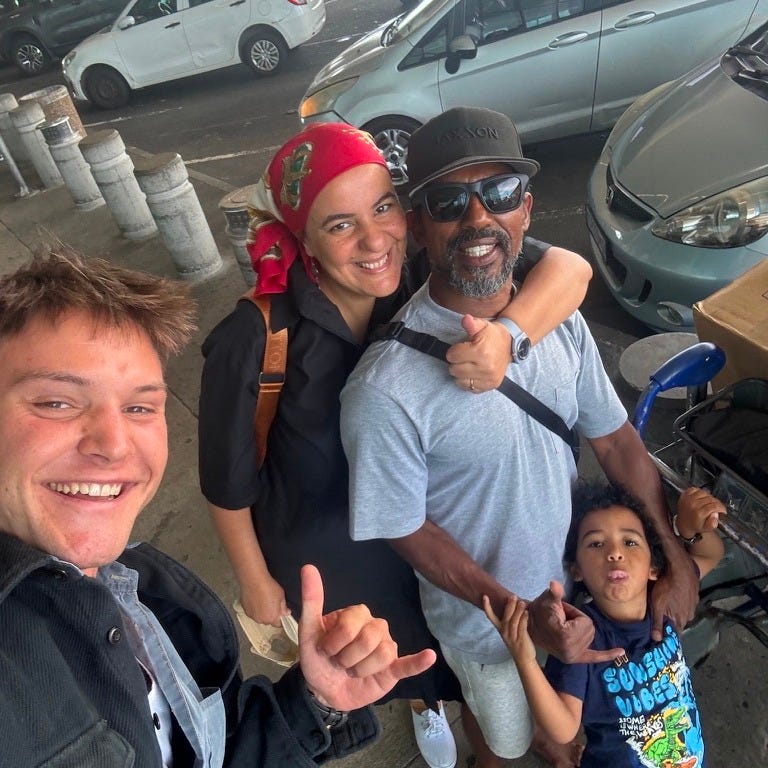
December 16, at the airport, Akram held my hand. I stood with a cart loaded with the big cardboard box my folding bicycle goes inside and the backpack I’d been carrying for six months, much heavier than when I started. He didn’t understand this was goodbye. Not yet.
He clenched my index and pinky fingers, one in each of his hands. At the car I crouched down. His face was level with mine. Those huge brown eyes scanning me like I was a problem he was trying to solve.
Dan, when will you be back? he asked me.
I don’t know buddy, but I’ll be back. Don’t forget about me.
His eyes became a bit more glassy. So did mine. His hands had worked their way up my arm. Now clenching like a crocodile with a locked jaw.
Hind pulled him off. I stood up some and kissed him on the head the way I had noticed all his aunties and uncles did. I hugged Hind and Shafiek goodbye. I said I’ll see them soon, Inshallah, “god willing”, and walked through the airport doors I’d walked out of two months earlier. I tried to not look back too soon.
Two steps forward, one step back. When I turned, they were loading into the car. I waved. Then the car pulled away and a current of travelers engulfed me. Women in hijabs, men in long white robes. I was swallowed by the airport’s fluorescent hum and intercom announcements. I stood in line with my ridiculous box, writing notes on my phone, feeling the kind of hollow that I’m starting to know airports so well for.
It felt like saying goodbye to family. Because it was.
Who’s controlling them, you or me?
Maybe the question is the answer. The back and forth. Two steps forward, one step back. Fill, return, fill again. Good control isn’t grip, it’s relation. The axis doesn’t belong to either of us. It emerges between us, in the turning, in the call and response. You spin. I spin. And somewhere in the middle, we hold each other steady.
Much love from Kamiyama,
Dan
^ final South African sunrise from Muizenberg Peak
This is what I wrote in my notes waiting in line at the airport after saying goodbye:
Thank you, Cape Town, for the salt in my hair and the ache in my ribs. For the tea poured high and returned to the pot. For the question I still can’t answer.
Thank you for Akram, Hind, Shafiek and Khalil, for making space for me. For letting me pour the tea. For teaching me that anger doesn’t have to break things. For the spinning heart. For the rhythm: two forward, one back.
Thank you for the men in the water who made space without asking me to earn it. For the brolove spoken without irony. For showing me what I’d been hungry for and didn’t know. The heart finds the heart. Imran, I’m going to make you that shirt.
Thank you for the train through the city, for Ester to talk with, for the drivers stitching livelihoods together. For the dreamers in the margins building what they needed.
Thank you Tanja for showing me academia doesn’t have to be as stuffy as I thought and for your never ending energy. And to everyone in the DMS Lab. Specifically, Zach for the films at the Labia, Ruby for the runs, Fadiyah for the chats, Zee for the million languages.
Thank you Hudson and the Roosters for being my landing pad and first South African braai. Ashoka fellows have been populating my radar ever since.
Thank you Natasha for teaching me to listen to David instead of wrestling him.
Thank you Paul and Mikayla for letting me show up randomly and start filming. We’ll figure out this fundraising. See you in LA in 2028.
And most of all, thank you Cape Town for the open hearts and lekke times!
More writings from Cape Town:
Cape Town: What Connects Us, Controls Us

I’d been in Rhodes Hall at Oxford in England five months earlier, watching Joy Buolamwini screen her film, Coded Bias, about how facial recognition worked worse on Black faces. She’d chosen that colonizer’s hall deliberately. Now here I was at another Rhodes monument, being asked about WhatsApp security, realizing I was tracing the same old routes. What connects us, controls us. It was true when Rhodes laid his railway lines. It’s true now that Zuckerberg lays his undersea fiber optic cables.
The Man Who Sells Wire Surfers

When I first got to know him I was hesitant. I assumed he was just trying to get me to buy one of his wire surfers. But with time I realized that wasn’t what it was about. He explained his situation having formerly worked in Cape Town call centers. I explained my interest in home-baked tech that acknowledges the rhythms of a place. We had several conversations on how digital technology could be different from then on.
Dan, I am so grateful for your words, as always!!!
Such a beautiful post, I love how you describe so many facets of the place and how warm and candid your writing is