
I Feel SLOvenia
A BlackBerry, a River, and a Case for Designing Friction in Social Technology

Our first night in Ljubljana’s old town, a local cover band called the Pointless Rebels was playing Darius Rucker’s Wagon Wheel in a cobblestoned square. American country music bouncing off Habsburg facades while my friend Keaton grinned that toothy smile of his, the one that takes over his whole face and makes everyone around him start smiling too. We’d just arrived after a day and a half on trains from Amsterdam, watching landscapes unfold through windows, and here was this perfect absurdity to welcome us.
I’d brought a 2008 BlackBerry Pearl with me, trackball navigation and T-Mobile branding, a parting gift from my 80-year-old neighbor in London. “You’re seriously going to use that thing?” Keaton had asked the day before we left, perched behind me on my folding bike’s rack as we rode tandem through Amsterdam, his grin spreading wide. Twenty-second camera boot time. Every video a negotiation: navigate to video app, wait for boot, press record, wait another 20 seconds for the red light, turn sideways, press trackball to pause, navigate to save. Skip any step and the file corrupted. I was trying to feel what digital interfaces were like before seamlessness became the absolute goal.
Slovenia adopted ‘I feel Slovenia’ as its official brand in 2007, with green sustainability at its core. The branding emphasized balance, connection to nature, and what they called ‘the harmony of the senses.’ Ljubljana’s old city displays architectural layers from its imperial takeovers: Venetian-influenced buildings from the 15th-18th centuries, Habsburg-era fortresses and Baroque churches from Austrian rule (1278-1918), Art Nouveau additions from architect Jože Plečnik in the early 20th century, and structures from the Yugoslav period (1945-1991). The country gained independence in 1991. While the original 2007 brand focused on emotional connection and green living rather than explicit slowness, Slovenia’s tourism marketing has since embraced slow tourism as a natural extension of these values promoting hiking, cycling, and what they call ‘time, tranquility, and authenticity’ as counterbalances to modern life’s pace.
The Soča River runs emerald green through Slovenia’s Julian Alps. Not turquoise, not teal. It’s a glowing green unlike any water I had seen before. I assumed it had come from glacial sediment but was wrong: the river grinding against limestone bedrock called marl, releasing microscopic particles of calcium carbonate that suspend in the water and make it glow. When you wade in, the cold shocks through your calves. The current tugs at your ankles. Stones shift and resettle under your feet with each step. The river’s force meeting yours, water that has spent lifetimes carving through rock now carving, momentarily, around you. That resistance is what lets you feel it.
We spent days walking in the mountains before descending to follow this river and the landscape it carved out. Our first climb in the mountains was to Roblek Dom: a straight up hike that took us, unexpectedly, through a castle. Early season snow had nearly thwarted our plans, but we pushed through to reach the hut, where we met the hut keeper Grega who had told us over the phone halfway up that he was going to visit the hut to open it up for us (phew). Something roared inside me on that climb. These were proper mountains. Jagged ridges, snowfields clinging to north faces, treeline. I’d spent months in the flatlands of Amsterdam and London, and now every switchback felt like returning to a gradient my legs remembered.
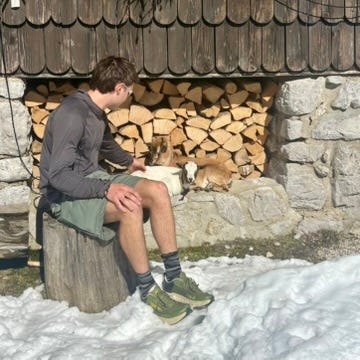
When we arrived, Grega’s goats Lilly and Milly were sunbathing on the rocks, completely unbothered by the unseasonable snow. Grega himself appeared in a rush of movement: wind-burned cheeks, immediately tidying, winterizing, shocked by the early storm. He insisted we not help while he worked, then gave us some rowdy drink distilled from a nearby tree while we played Uno with polka music blasting through the hut. Over goulash and his cheesecake prepared by his wife, he showed us how he’d been trying to program an Arduino with ChatGPT to monitor the hut’s water tanks. Later that night, he pulled out his smartphone to show us his TikTok: thousands of followers watching his mountain videos, bringing viewers (who oftentimes become guests) to Slovenian wilderness and this hut perched above the clouds.
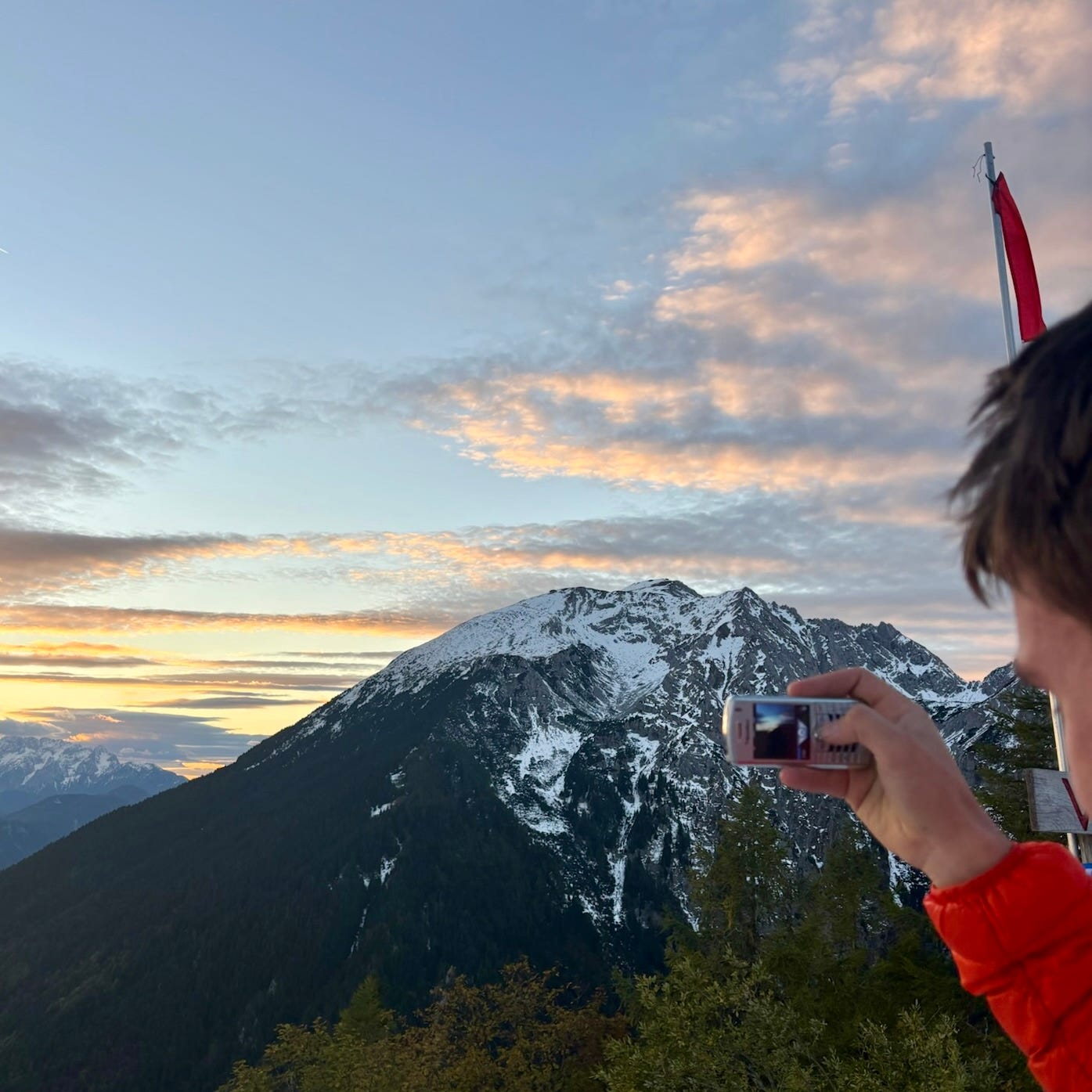
Walking with Keaton through those mountains, his enthusiasm for every signpost, that smile breaking out whenever we’d round a corner to something unexpected, I kept thinking about how the BlackBerry made documentation an event. “Okay, let’s stop. I want to get this on the BlackBerry.” A pause. An announcement of intention. So different from seamless capturing on a modern smartphone. Through the BlackBerry’s unpolarized lens, the infamous Lake Bled’s emerald water looked black. The footage came out strange, grainy, but somehow more honest. It required the intentionality of a proper film shoot but produced a product of crude fidelity.
We missed filming moments too. Running to catch trains at stations, I’d reach instinctively for the camera—a paraglider soaring beside a train window, Grega cracking an egg in a pan—but the twenty-second boot time meant the moment passed. That instinct to capture, prohibited. Which made me wonder: was the loss the problem, or was the problem that I’d been trained to reach for documentation at all? The BlackBerry’s resistance forced a choice the modern smartphone erases: live it or record it. Not both.
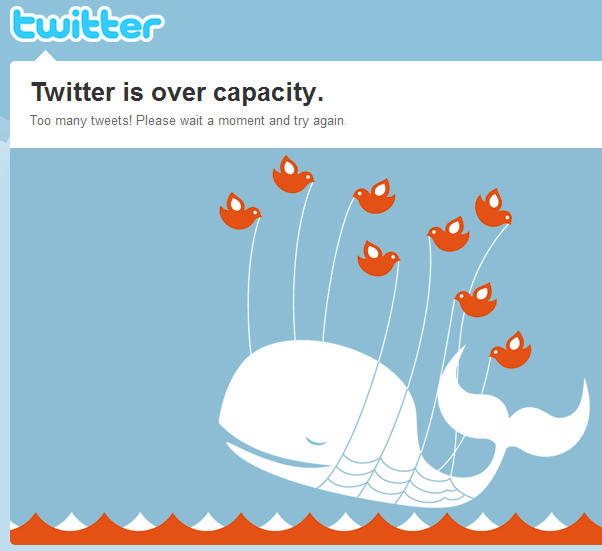
Using that BlackBerry in Slovenia, waiting twenty seconds for the camera to boot while Keaton laughed, I felt part of what people mean when they tell me: “I wish we could go back to 2010 technology and just hang out there.” Back when BlackBerry threw launch parties that celebrities actually showed up to, when that trackball clicking through menus was the sound of the future. They remember typing on physical keyboards where each letter required actual pressure, where you could text in your pocket by feel alone but it took effort. They remember Twitter’s fail whale, that cartoon whale being lifted by birds when servers crashed (which meant you’d close the app, walk away, come back later). They remember Instagram being chronological, which meant you’d eventually reach the end. The end. When you finished, you knew you were caught up, and you could leave. Information streams were finite, which meant your attention could be too. They remember phones dying at 3pm, forcing natural endpoints to the day. The dead battery became permission to be unreachable. Or even the home button’s physical click creating micro-moments of decision. Each time you pressed home, you chose to leave an app rather than being pulled endlessly forward. These weren’t design choices, they were limitations. But those limitations created conditions for something we’ve lost: the ability to finish, to stop, to be done.
Designing Friction
Alternative user interfaces today could create friction by design. Luna Maurer and Roel Wouters at Studio Edenspiekermann in Amsterdam wrote a manifesto about this called “Designing Friction,” recognizing that digital technology has spent fifteen years eliminating every pause, every obstacle, every moment of resistance. They argue we need to embrace discomfort, that in uncomfortable environments we discover the richness and breadth of friction. “With friction we get immersed, we get creative, we get alive.” Sort of like the resistance felt from the water when standing in the Soča. What if instead of disappearing into frictionless swipes, our digital interfaces pushed back enough to remind us we’re here too?
What might this look like, though? Here are some ideas:
Start with time itself. Imagine a social feed that only refreshes once an hour, like checking a mailbox instead of pulling a slot machine lever. Messages that sit in a queue for sixty seconds before sending, giving you time to reconsider, to let the heat of the moment pass. The way letters used to travel slowly enough that by the time your words arrived, you’d already changed. Being bored lets you start new fascinations, gets you into productive flow. When friction acts to slow things down it allows us to step into the now. And what if feeds actually finished? You scroll to the bottom and it says “You’re all caught up. Come back tomorrow.” Not infinite, not endless. Done. Like rivers meeting the sea.
Or consider interfaces that engage the body, that create the physical resistance screens have erased. When we interact with glass we lack pushback. Swiping makes our world superficial. But human life gains depth through thing-relations, through objects that bring us together physically and create connections through their resistance. What if to “like” something you had to hold your thumb down for three full seconds, feel the pressure, commit the gesture? What if sending a hurtful message required you to physically shake your phone, making the choice visceral and deliberate?
And we could design for the non-positive: cherishing the digital unseen, the disagreement, the doubt, the vulnerable, the complicated. Today’s platforms enforce the Like, feed our desire for attention and being seen, but this doesn’t often produce the right kinds of resistance. What if instead of likes, posts accumulated questions? What if platforms showed you posts from people who disagreed with you first, before the comfort of your usual crowd? What if there was a button that said “I’m uncertain about this” or “This makes me uncomfortable but I’m listening”? Maybe we need environments that trigger unpredictable behavior, that let us step out of our patterns, do something strange. An algorithm that occasionally surfaces a post from five years ago, chosen not by relevance but by randomness, making you encounter your past self unexpectedly.
I’m now working on a project called Rhythm Lab with people I’ve met along this fellowship. It’s an experiment in making friction adjustable, translating each platform’s rhythm into generative music so you can actually hear and feel how different interfaces shape time. Instagram’s endless scroll sounds different from X’s staccato bursts. Each platform’s pace and content made audible, and adjustable. It’s a new way to texture social technology.
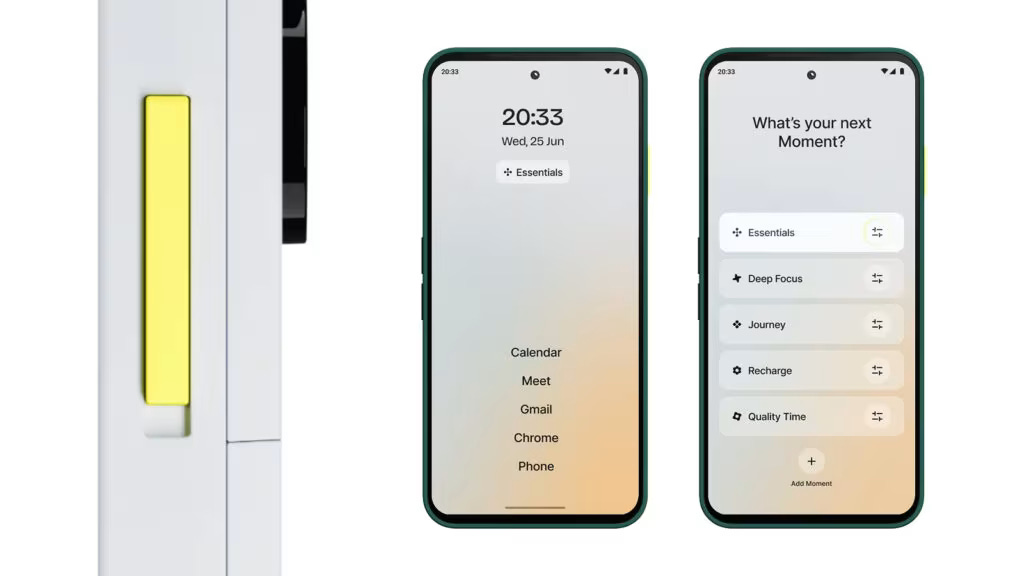
Currently the market can’t provide real friction without destroying business models built on extraction. So they offer us placebos: toggles and optional resistance. Fairphone, a smartphone company created on principles of circularity (and incubated by Waag, advisors on Rhythm Lab), just released their latest phone with a button to activate what they’re calling Moments. Flip a switch and the phone turns into a dumb phone. Or take the Brick, an NFC-enabled brick that disables all the addictive apps on your phone once you tap it. I’ve even met quite a few folks now who have a flip phone alongside their smartphone to toggle on resistance.
But optional resistance is like a diet while living in a candy store. The problem isn’t individual willpower; it’s the environment itself. Real friction has to be structural, built into the foundations of how these systems work. Not a button you can press to temporarily escape the attention economy, but platforms that never sought to capture you in the first place. Not apps with time limits, but software with different intentions entirely.
This is where regulation becomes essential. The EU’s Digital Services Act, which came into force in 2022, is fundamentally reshaping the digital landscape by requiring platforms to offer users at least one recommender system not based on profiling, provide clear explanations for content moderation decisions, and give researchers unprecedented access to platform data. The Act applies graduated obligations based on service size and risk levels, with the most stringent requirements for platforms with over 45 million monthly EU users. It’s not just about controlling Big Tech; it’s about creating space for alternatives to emerge—alternatives that don’t need to be perfectly seamless to survive.
And they are emerging. Eurosky, a new European initiative built on AT Protocol (the same open protocol behind Bluesky), aims to create shared infrastructure for social media that works across the continent. Instead of building yet another platform to compete with Meta and X, Eurosky provides the foundational layer that makes it cheaper and faster for European startups to launch and scale social applications. Polling shows majorities in France, Germany, and Spain favor Europe-based social media platforms, with only 5% of respondents preferring U.S.-based providers. The project includes decentralized content moderation and ensures that Europe’s digital space is governed by European laws, values, and rules, rather than being subject to the influence of foreign companies or governments. Because Eurosky isn’t designed around advertising revenue or engagement metrics, it creates room for platforms built on top of it to experiment with friction.
In Canada, Gander Social is taking a similar approach. Built on Canadian servers with Canadian ownership, it raised over $1 million from 1,300 Canadian investors in just over a week through crowdfunding. The platform, also built on AT Protocol, allows users to choose whether their posts reach global audiences or stay within a Canada-only network. Named after the Newfoundland town that welcomed stranded travelers after 9/11, Gander embodies an alternative vision: social media as community infrastructure rather than extraction machinery. Without the pressure to compete with Silicon Valley’s bottomless venture capital, Gander can afford to be slower, more deliberately focused on community, less addictive.

And then globally, Mastodon, a federated platform on the ActivityPub protocol that’s particularly popular throughout Germany and Europe and crowdfunds itself through Patreon rather than advertising. This changes a lot about what the platform can be. No advertisers means no pressure to maximize engagement. No engagement optimization means room for friction. The platform can prioritize user control over user retention, community health over growth metrics. In South Africa I recently met a sailor who uses Mastodon to keep his sailing crew connected.
These aren’t just new platforms; they’re new models. By building on open protocols, they ensure users keep control of their data and networks. If they switch apps, they don’t lose their connections or content. This prevents the platform lock-in that created today’s monopolies and enables genuine competition. They’re treating social technology more like a public utility and less like a privatized data collection surveillance tool, meaning there is far less a push for maximizing user attention. Yes, they’re less profitable than the attention harvesters. That’s precisely why they can afford friction. Because they’re not trying to extract every possible second of your day, they can build interfaces that let you finish, that let you leave, that push back just enough to remind you you’re alive and a part of communities IRL.
The candy store is starting to stock different sweets. Not just sugar-free versions of the same addictive products, but fundamentally different offerings that nourish rather than extract. The regulatory frameworks are creating the conditions. The alternative infrastructures are being built. The collective will is emerging, as evidenced by European polling data. What we need now, more than ever, is individual action that advocates and votes for the policies that push back.
The Soča has been in conversation with stone for millennia. It didn’t conquer it. Didn’t bypass it. Shaped it and was shaped in return. The limestone creating that emerald green was once an ancient seabed, organisms compressed into stone, then carved back into light by friction.
Perhaps implementing friction into social technologies could also make us glow. Not through extraction and optimization, but through resistance and relationship. Every hour fed to the algorithm is an hour not spent in conversation with stone and water, with ourselves, or with another human.
We need technologies that ask for something different. Something with more designed friction. Texture. Because things that push back remind us we exist. They return us to our bodies, to time, to the irreducible fact of being here, now, together. Friction doesn’t have to be seen as simply slowing us down. It also wakes us up.
Much love from Cape Town,
Dan
What a journey Dan! I got to spend some time on the Soca earlier this year! What an amazing place.